Introduction
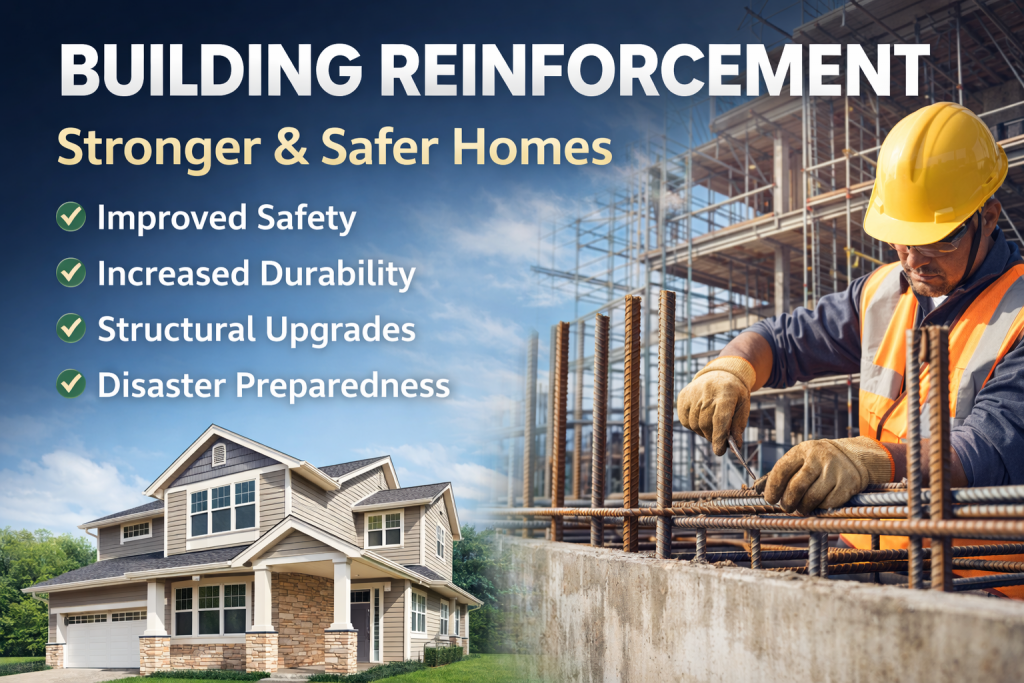
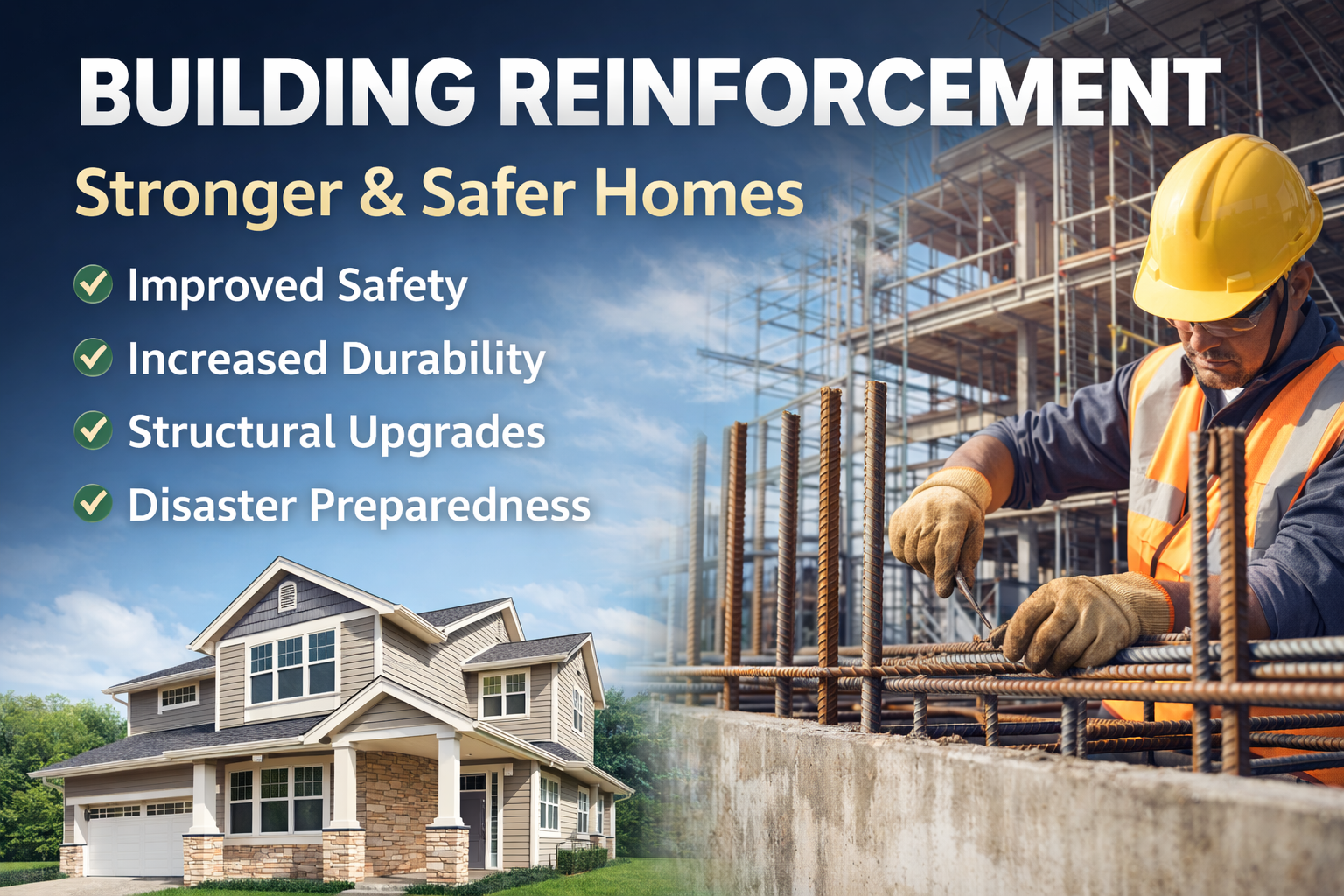
When it comes to home construction and renovation, aesthetics are important — but structural integrity is essential. Building reinforcement plays a crucial role in ensuring that residential structures remain safe, durable, and resistant to environmental stresses.
Whether you’re planning a new home, remodeling an existing one, or upgrading interior spaces, understanding structural strengthening methods can help you make smarter, long-lasting decisions.
What Is Building Reinforcement?
Building reinforcement refers to the process of strengthening a structure to improve its load-bearing capacity, durability, and resistance to forces such as:
- Earthquakes
- Strong winds
- Soil movement
- Moisture damage
- Heavy loads from renovations or additions
Reinforcement is commonly applied in foundations, beams, columns, walls, and slabs.
Why Structural Strength Matters in Residential Construction
Many homeowners focus primarily on interior design and finishes. However, a beautiful home must also be structurally sound. Proper reinforcement ensures:
✔ Long-term durability
✔ Increased property value
✔ Reduced maintenance costs
✔ Improved safety for occupants
✔ Better performance during natural disasters
In modern home construction, structure and design must work together.
Common Building Reinforcement Techniques
1. Reinforced Concrete
Reinforced concrete combines concrete with steel bars (rebar) to improve tensile strength. It is widely used in:
- Foundations
- Columns
- Beams
- Floor slabs
This method is essential for modern residential buildings.
2. Steel Frame Reinforcement
Steel framing provides additional structural support and flexibility. It is especially useful in:
- Multi-story homes
- Open-plan interior designs
- Large-span ceilings
Steel improves both strength and architectural freedom.
3. Foundation Strengthening
Weak foundations can cause cracks, uneven floors, and structural instability. Common foundation reinforcement methods include:
- Underpinning
- Adding concrete footings
- Soil stabilization
- Installing micro-piles
Strong foundations are the backbone of safe homes.
4. Shear Walls for Seismic Resistance
In earthquake-prone regions, shear walls significantly improve a building’s ability to resist lateral forces.
They help:
- Reduce structural sway
- Prevent collapse
- Protect interior finishes and decor
5. Carbon Fiber Reinforcement
Modern construction increasingly uses carbon fiber wrapping for strengthening beams and columns. It is:
- Lightweight
- Highly durable
- Non-corrosive
- Ideal for renovations
This solution is especially useful when upgrading older homes.
How Reinforcement Impacts Interior Design
Structural reinforcement is not separate from interior design — it directly affects it.
For example:
- Removing walls in open-concept renovations often requires beam reinforcement.
- Installing heavy stone countertops requires floor load evaluation.
- Adding large windows may require structural framing upgrades.
Design decisions should always align with structural engineering principles.
Signs Your Home May Need Structural Reinforcement
Homeowners should watch for:
- Cracks in walls or ceilings
- Uneven floors
- Doors and windows that don’t close properly
- Foundation settlement
- Water intrusion in structural areas
Early intervention prevents costly repairs later.
Sustainable and Green Structural Reinforcement
Eco-friendly construction is becoming a priority. Sustainable reinforcement strategies include:
- Using recycled steel
- High-performance concrete with reduced carbon footprint
- Durable materials that extend building lifespan
- Smart structural planning to reduce material waste
Stronger homes last longer — and that reduces environmental impact.
Professional Assessment Is Essential
Structural reinforcement is not a DIY project. Always consult:
- Structural engineers
- Licensed contractors
- Construction specialists
A professional assessment ensures safety and compliance with local building codes.
Final Thoughts
A well-designed home is more than beautiful interiors and stylish decor. True quality lies beneath the surface — in the strength of its structure.
By investing in proper building reinforcement, homeowners can ensure safety, durability, and long-term value.
If you are planning a renovation or new construction project, consider structural strength as your first design priority.