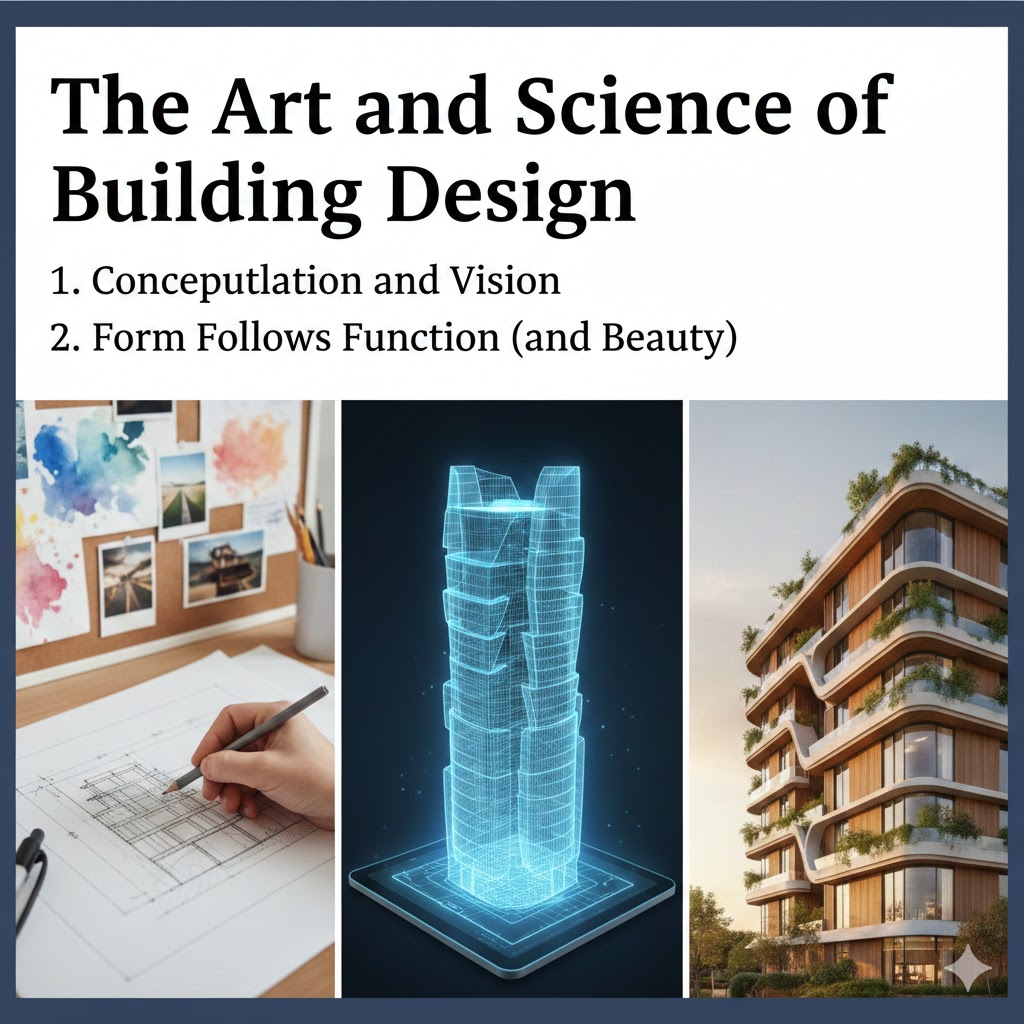
Building design is a fascinating field that blends creativity with technical expertise. It’s about much more than just drawing blueprints; it’s about envisioning spaces that are functional, aesthetically pleasing, sustainable, and safe. Let’s delve into the key aspects that make up the art and science of building design.
1. Conceptualization and Vision
Every great building starts with a vision. This initial phase involves understanding the client’s needs, the site’s characteristics, and the project’s purpose. Architects and designers work to translate abstract ideas into tangible concepts. This might involve mood boards, sketches, and preliminary 3D models to explore different possibilities.
2. Form Follows Function (and Beauty)
While the adage “form follows function” is fundamental in design, modern building design also emphasizes aesthetics. A well-designed building should not only serve its purpose efficiently but also be visually appealing. This involves careful consideration of lines, shapes, textures, colors, and materials to create a harmonious and engaging structure.